Author: Jo Bossart/ParrySounds.com

Parry Sound Boat Launches – Smelter Wharf

This is the fourth post looking at boat launches in Parry Sound. Previous posts looked at the launches as a group, with separate posts on the Champaigne and Waubuno Street launches.

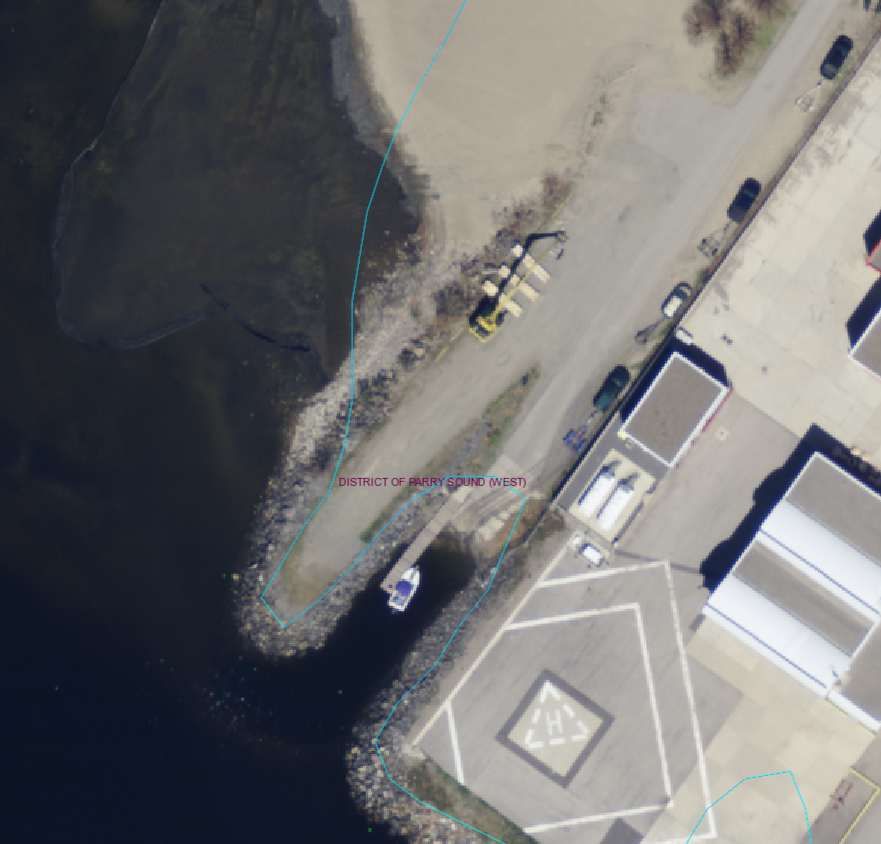
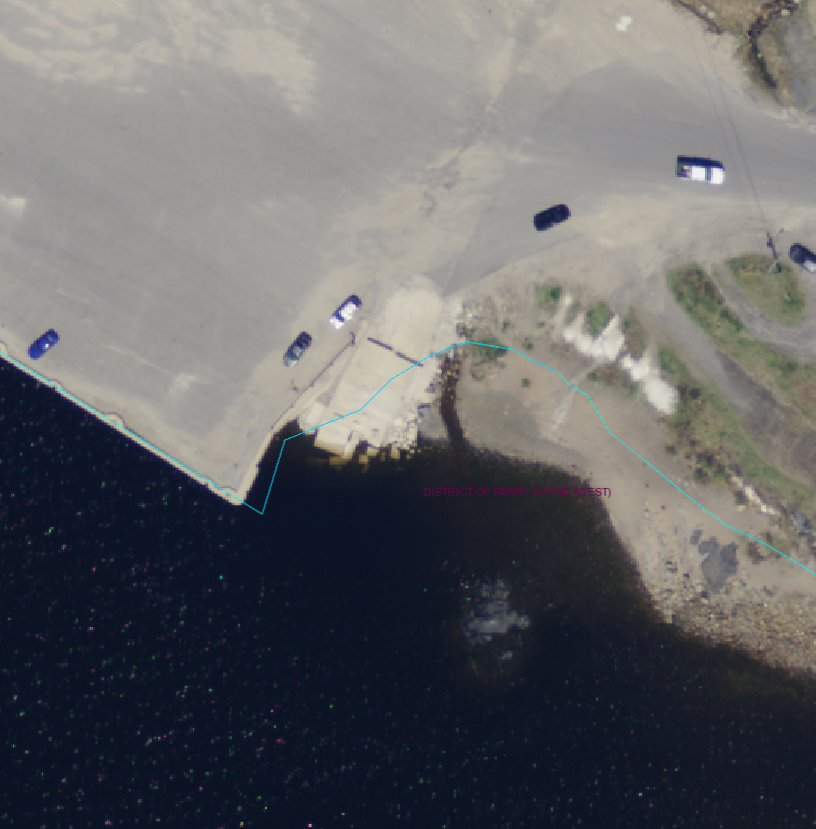
Also known as the Salt Dock (it’s a major facility for the offloading of road salt for the district) the Smelter Wharf is ‘in transition’ in my opinion. The launch was repaired last year to the tune of about $50,000, and as you will see from photos below it seems to need additional work. At present the launch is restricted in terms of the launch width, but it should not present an issue for any vessel that can be trailered on the road. The aerial photo below (click for a closer view) shows the launch site last Spring while it was still closed off and awaiting repair, with the docks not yet installed.

Smelter-Wharf_Launch_WPSGN

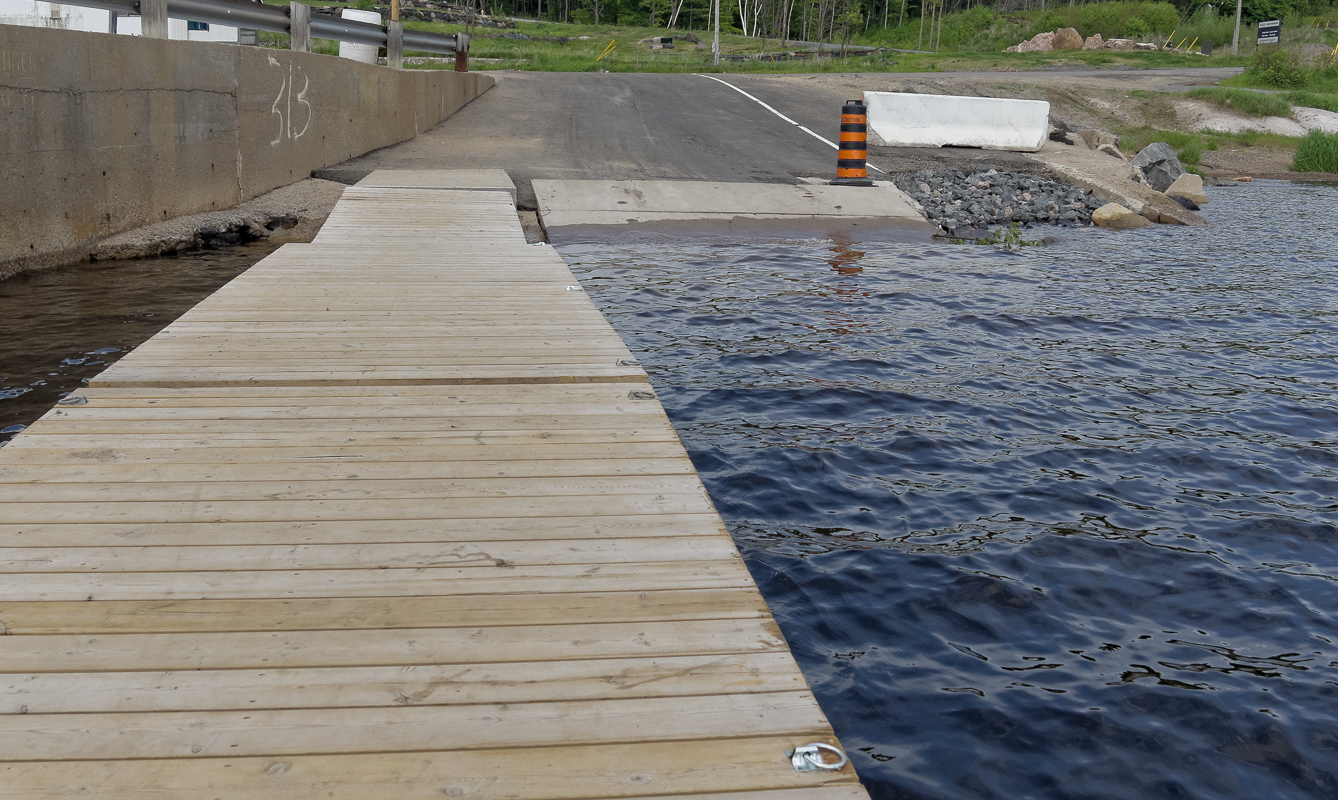
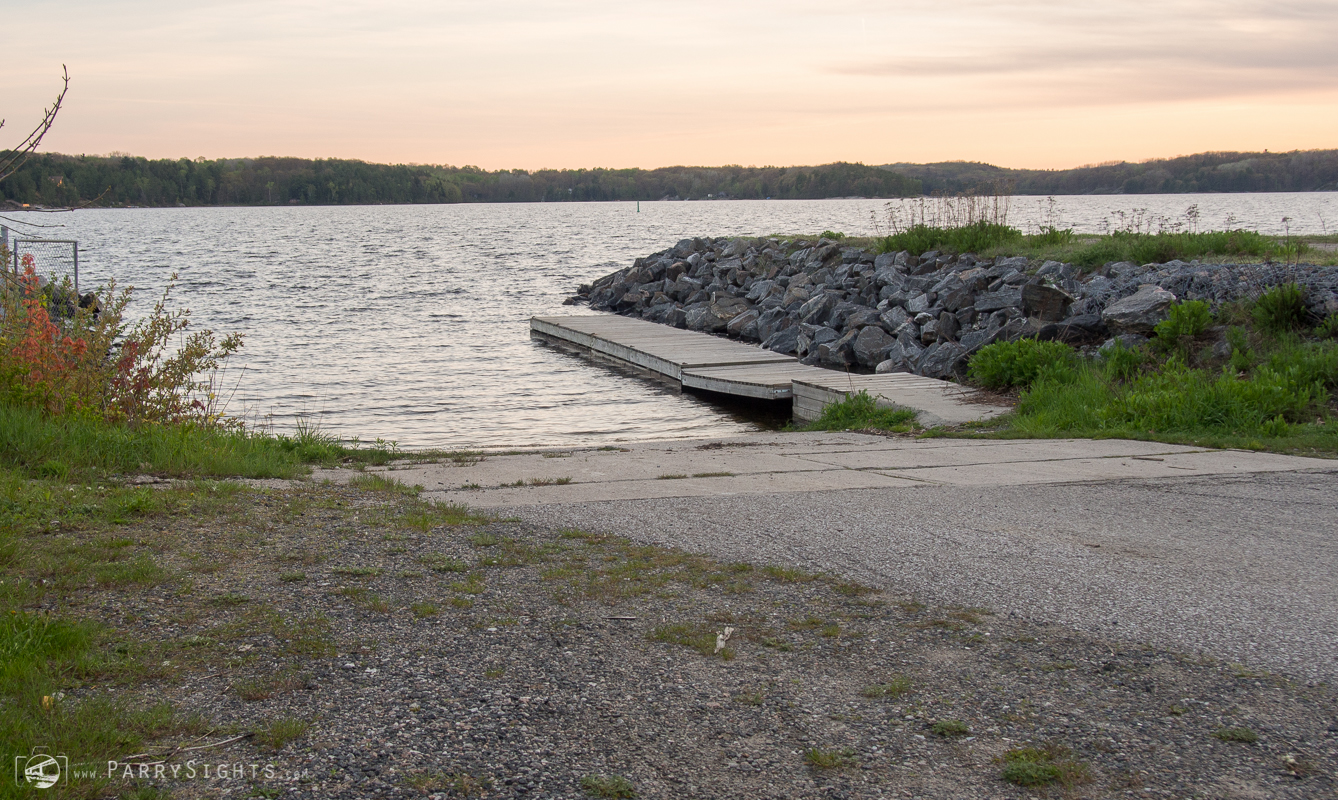
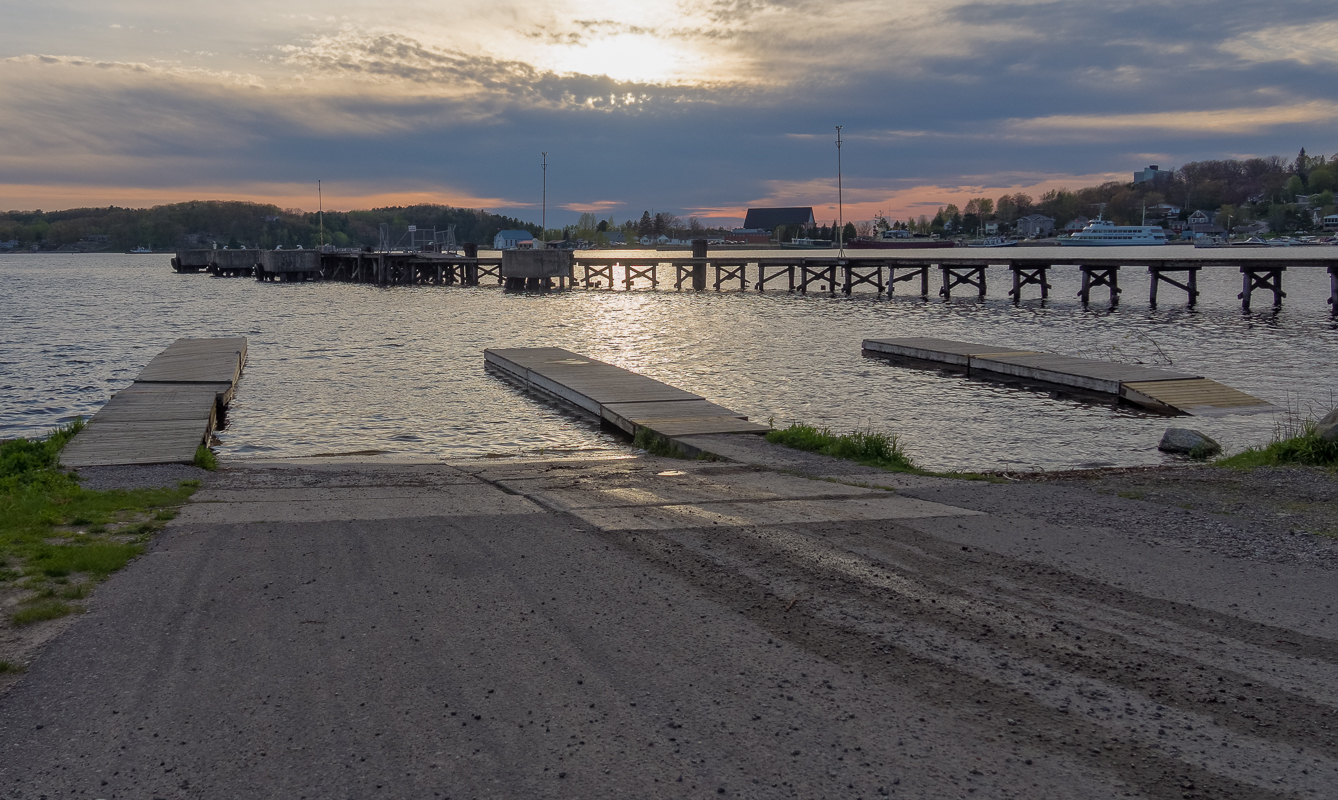
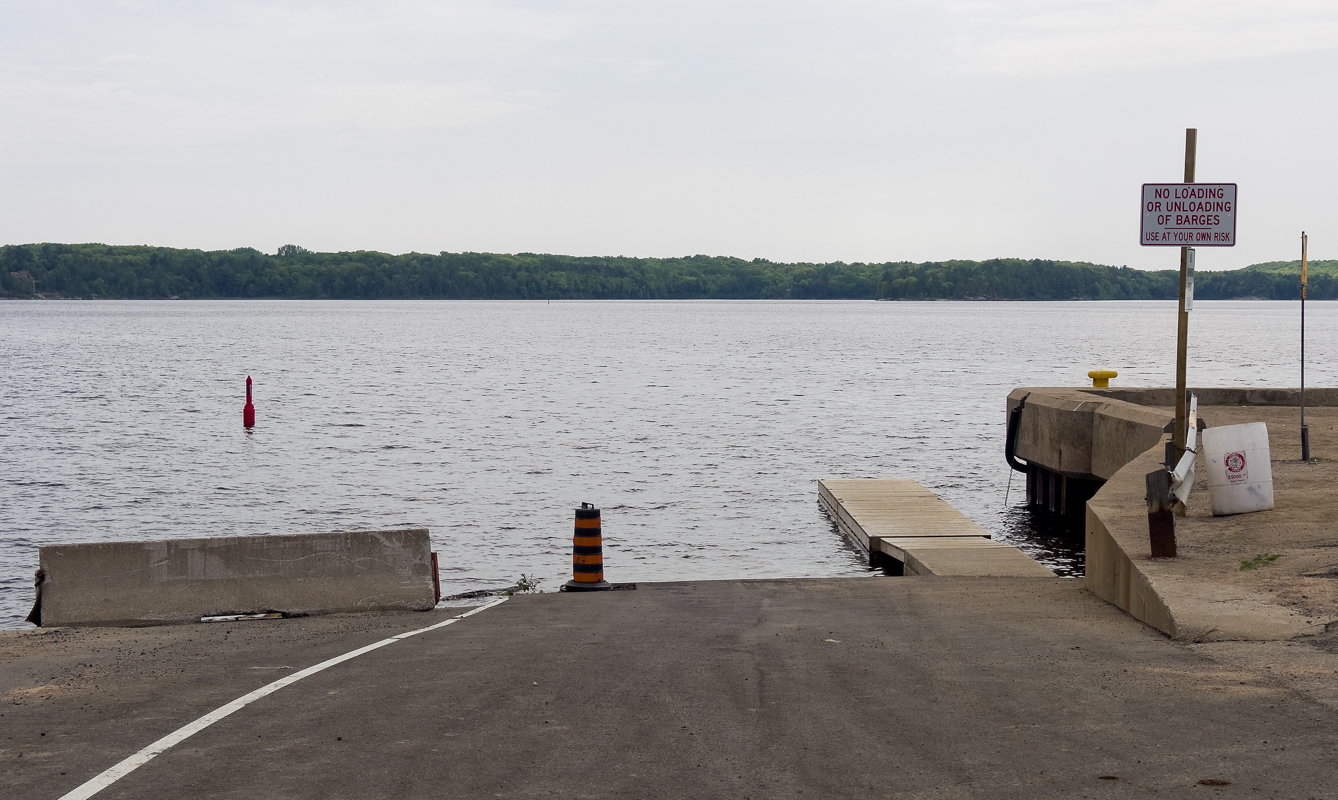
The two following photos show the condition of the launch as of June 2, 2014. The width of the launch is limited and a small section of the launch requires some resurfacing (construction cone). Otherwise the launch is quite functional with a 40-foot dock. There is a rapid drop off, so it isn’t necessary to back up too far before a boat will float.

Looking at the Smelter Wharf Launch

OLYMPUS DIGITAL CAMERA

There is lots of parking available, assuming that there are no events/ongoing in the wharf area. Despite this I rarely, if ever, see vehicles with trailers parked in this area. The Champaigne Street launch seems to be where people leave vehicles and trailers. I suggest you contact the Town for information if you you are interested in longer term parking at this site. I expect there is no issue for same day, or single day overnight parking.

Looking Back at the Launch

OLYMPUS DIGITAL CAMERA

Extended docking is not appropriate beyond the time required to launch.

JB – Communications Officer


Parry Sound Boat Launches – Waubuno Beach

This post takes a look at the Waubuno Beach boat launch. In a recent post we presented a map identifying the free boat launches in Parry Sound. For those of you new to the area and wanting to get onto the Big Water, this information may be helpful. The previous post looked at the Champaigne Street boat launch area.

The Waubuno Beach boat launch is a secondary boat launch beside the Coast Guard Station. The launch area is protected and relatively small. The dock, about 40 feet long, offers very limited space to tie up if there is active launching.

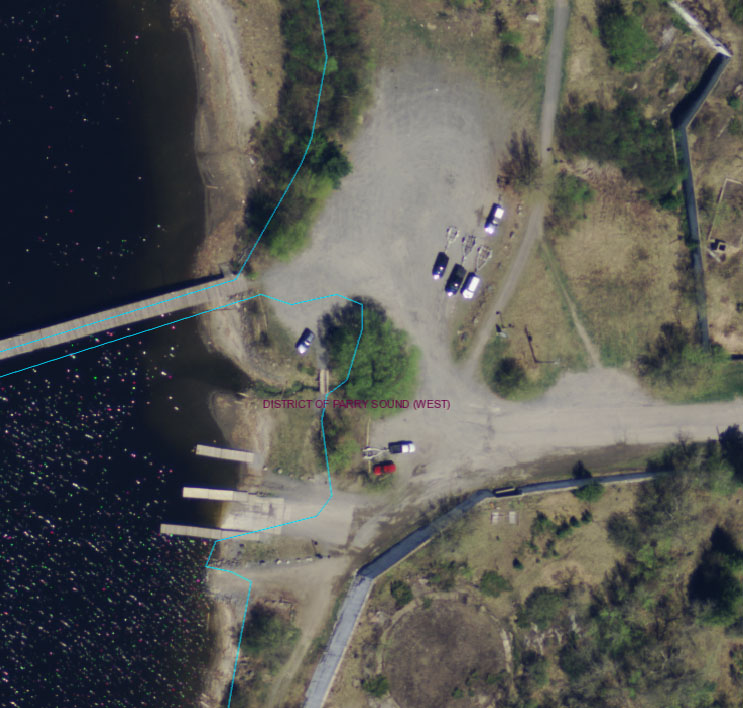
Waubuno_Launch_WPSGN

The parking area is also very limited and it’s not clear what parking is permitted and for how long. I don’t recall seeing any longer term vehicles and trailers parked in this area, unlike the Champaigne Street launch area. I suspect longer term parking in the paved Waubuno Beach lot (not shown) is discouraged, especially if there is a trailer involved. Once again it is suggested that you contact the Town of Parry Sound for information and any restrictions. But with the Champaigne Street launch just a couple of kilometers away offering a wider launch area and lots of parking there seems little reason to use this launch for anything but boating for the day. The Smelter Wharf boat launch is even closer and we’ll take a look at this facility in the next post.

Here’s a photo of the boat launch taken later in the day. That’s Parry Island in the distance.

 A Ground Level Look at the Waubuno Beach LaunchOLYMPUS DIGITAL CAMERA


Parry Sound Boat Launches – Champaigne Street

In the last post we presented a map identifying the free boat launches in Parry Sound. These launches will be familiar to those who have been coming to Parry Sound for  years. For those of you new to the area and wanting to get onto the Big Water, this information may be helpful. In this post we are looking at the Champaigne Street boat launch area. (Yes that’s the correct spelling, Champaigne, I went back to a 19th Century map to confirm the spelling. It could have been error at that time but it has stuck.)

The Champaigne Street launch is probably the most practical and useful for those who wish to come up to Parry Sound, launch their boat, and head out for a few days. It offers a reasonably good boat launch for anything up to 30-feet, perhaps more. There is also a barge ramp beside the launch for those with specialized needs. There are a total of three docks, about 40-feet long. Two are accessible from the shore, the third is a bit under water as it touches the shore. (Early 2013 image when the water was quite low, it’s closer to average at this point, 2014/05.)

WPSGN_Champaigne_Dock_2013

The docks are intended to be used for the loading and launching of boats rather than dockage. This boat launch can get busy and there is no room for boats to be tied up. Free dockage for a couple of hours has historically been available at Big Sound Marina, with charges for overnight dockage. Big Sound Marina has recently been put under new management and it’s possible that they might not extend courtesy dockage for people who want to get out and explore the Town, have a meal or resupply. Give them a call if you have any questions, here’s a link to their website..

The real appeal of the Champaigne Street boat launch is the availability of free parking for vehicle and trailer. The Town is relaxed with regard to parking at this site. I have had informal discussions with Town Staff and they indicated that there is no issue with parking there for a few days, let’s say four or less. Beyond that it is advisable to contact the Town to discuss a longer stay. They probably want to be sure that there is ‘fair’ use of the facility and people aren’t using the area as a ‘storage’ location.

Here’s a photo of the boat launch taken later in the day. The larger dock you see a little further away is the former Imperial Oil dock that is now sitting unused. It cannot be accessed from the shore. The barge ramp is to the left and not shown.

OLYMPUS DIGITAL CAMERAFor those of you with more specialized needs Sound Boat Works offers a hydraulic trailer and crane with the ability to launch and haul power and sail boats up to about 55-feet (possibly even larger).


Parry Sound Boat Launches – Introduction

With Spring actually here, boats being launched, and the prospect of Summer, it’s perhaps worth providing an overview of the boat launches available in Parry Sound. Over the next couple of weeks there will be a series of posts providing information about the launches. This post provides a general overview of the launches.

The Town of Parry Sound provices the public with four no-fee boat launches. Not only can the boat launches be use at no cost, there is no charge to park vehicles and trailers for a reasonable length of time. Three of these boat launches provide access to Georgian Bay, via Parry Sound Harbour or the Big Sound, the fourth provides access to Mill Lake.

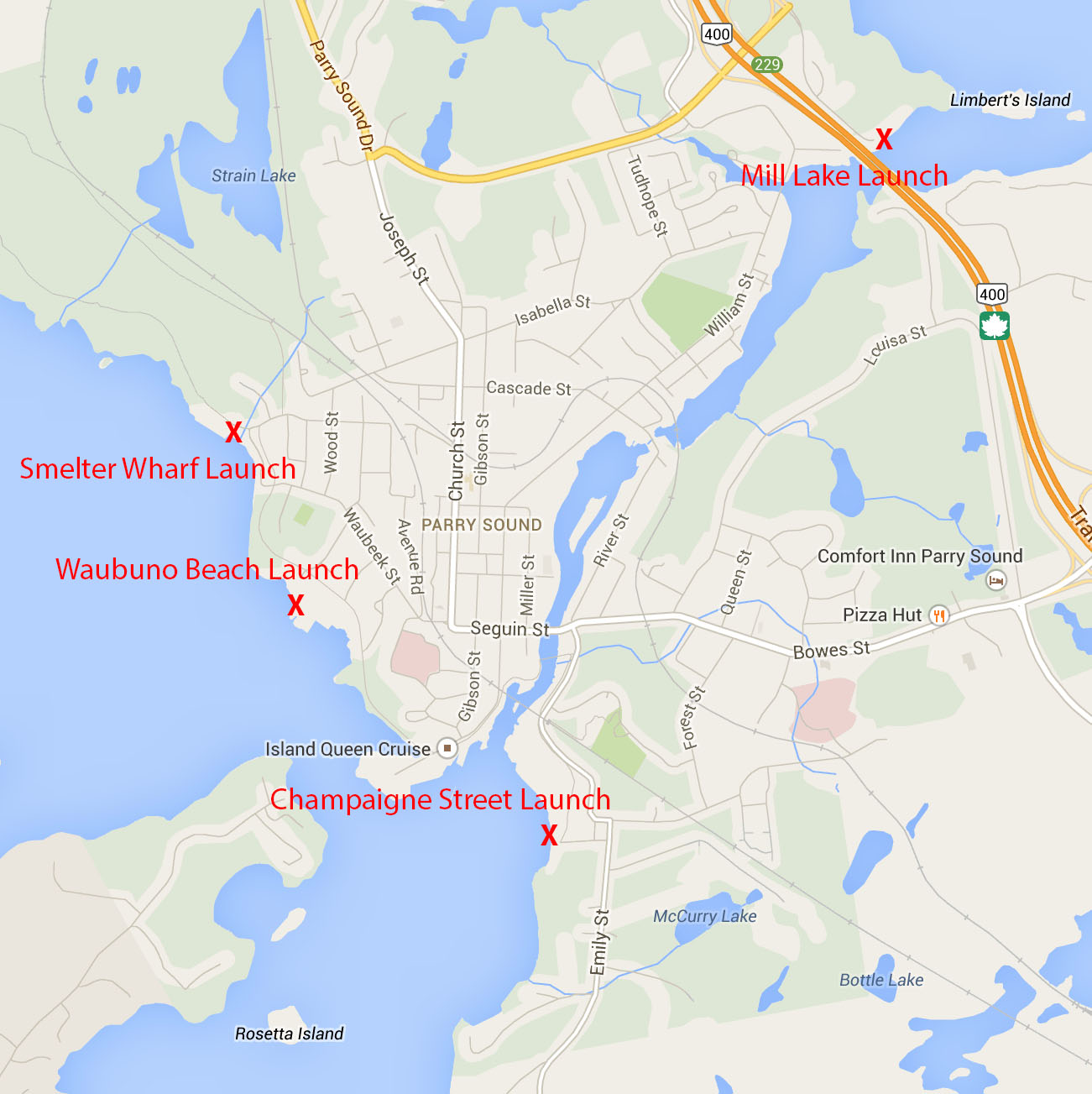
Here is a map of the area with the four boat launches marked in red. The roads on the map are a little misleading. All of the boat launches are easily accessed by all but the largest of commercial vehicles. In the next few posts we’ll take a look at each of the boat launches individually with attention to details that some may find important.

Parry Sound_Map_Labeled_2014-05-21

Click on the map for a larger version.

JB – Communications Officer


Training / Executive Officer’s April Update

On April 22, 12 boaters graduated from the Maritime Radio Course held at Lakeland. This is important for boaters since a certificate is needed when operating a VHF radio.

This is the time of year when boaters harass marina operators to get their boats into the water. Four or five calls per person is common. The local saying here is that the Sound is clear of ice within a week of April 21st. 2012 broke the belief with an early break up. Some boats were in the water on the first day of Spring. It looks as though 2014 will break it the other way.

So: Before planning on early season boating remember: The early bird gets the worm. The second mouse gets the cheese.

The early boater gets to boat alone. Silence and still water can be delightful but first boaters can be subject to the floating debris left after the ice is gone. This can range from planks and trees limbs to docks that have broken free.

The first mouse, the one who gets onto the bay before a strong wind has blown it clear of this debris, can have some dangerous experiences. Planks torn from docks, their four inch nails sticking up, can damage the smooth underwater hull of a boat. There is nothing like skimming along through an early Spring fog and having a tree, branches and all, loom out of the mist in front of you.

Then there is the ice. It doesn’t all melt overnight. An invisible skim of ice can do quite a number on a boat too. And if it does and your boat is sinking, who are you going to call who can possibly get to you any time soon? I do boat in the early season. My rules are simple. Carry the seven or eight items you must as demanded by law. Boat like you will never need to use them. Boat carefully, one hand for the boat – one for yourself, and make no mistakes. Or wait ’til things warm up some.

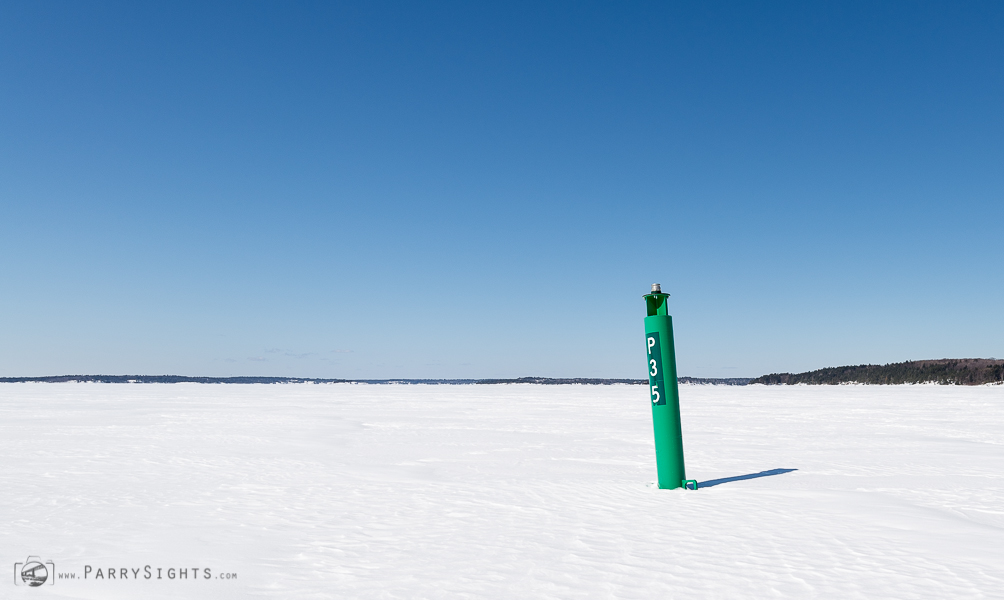
 Early Season ‘Boaters’ on the Big Sound – No WorriesParrySights-6905-2


State of the Sound Report – 2014-04-24

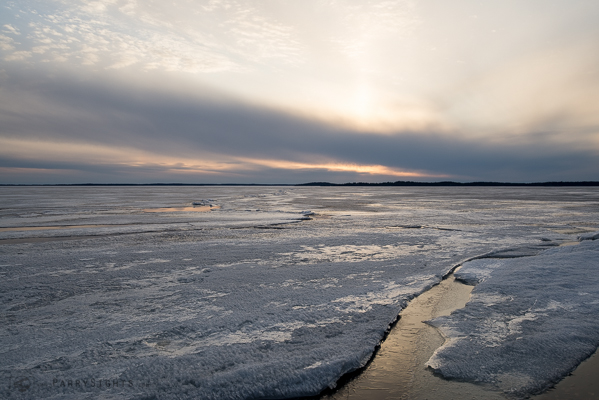
Not to be confused with the State of the Bay report (recommended reading) from the Georgian Bay Biosphere Reserve. As of yesterday evening, the Big Sound was icy white and thinning (much like my hair). The water is open from Parry Sound harbour to Three Mile Point in spots, but that’s about it. The photo below was taken yesterday evening from Monument Point on the North Shore Rugged Trail just north of Parry Sound looking west.

ParrySights-6842

iPad Navigation Apps – Informal Reviews Spring Update

Last fall I provided a series of informal reviews on navigation apps that could be used with a GPS equipped Apple iPad. That would be the Wi-Fi/Cellular version, which is priced at a $130 premium to the WiFi only model in Canada. In theory these apps should also work with the the WiFi/Cellular version of the iPad Mini and the iPhone. After using these apps last summer I suspect the screen size of the iPhone and possibly the Mini  is a little too small to be practical if you are traveling more than 20 kph, at least in our waters where there seems to be a rock every few hundred meters. In theory, if not in practice, these apps are also available for Android tablets and phones. The basic Nexus 7″ tablet, available for about $250, has the advantage that it has GPS built-in, and represents a significant savings over an iPad with GPS functionality. The “in practice” comment earlier relates to the fact that not all of these apps are yet available in an Android version.

All of the apps reviewed last fall have received updates over the winter. This review covers the changes in a general sense and updates my opinion of their value for my uses. A reminder, I operate a 21-foot Scout Dorado with a 150 hp Yamaha in and around Georgian Bay. There are a claimed 30,000 islands, and an estimated 100,000 shoals. We typically motor at about 40 kph to optimize travel time and fuel economy. Even at 40 kph things move by pretty quickly.

Becuase we still have ice on the Big Sound I have only been able to ‘desk test’ the upgrades. Desk use of the apps is really quite important. I spend hours looking over the charts and planning new routes and destinations. Google, Apple and Bing maps are well short of adequate when looking beyond where roads run, and available nautical charts are generally not detailed enough once you go off the charted courses. Paper charts also don’t zoom or scroll very well, although they do rotate very nicely.

The bottom line in my opinion (details follow).

#1 – Navionics for iPad (~$55.00, US & Canada)
#2 – iSailor for iPad (~$15.00, Lakes Superior, Huron Ontario, ..)
#3 – iNavX for iPad (~$120, app plus Georgian Bay only

#1 – Navionics

This app has made some changes in their app, but nothing that really makes a difference in my life. Although it’s not the cheapest it represents the best value in my opinion with vector graphic mapping and very good accuracy in terms of markers. I was also encouraged speaking to an individual at the Toronto Boat Show in January who said Navionics is actively doing depth measurements in Georgian Bay to fill in areas with limited existing information. Those are exactly the areas that I spend my time, off the beaten track. This is a good application that is easy to use on the boat and when sitting at the desk. The standard chart package covers all of the USA and Canada, much more than I need, but I’ve actually had fun using it while on a 3-hour dinner cruise out of Philadelphia on the Delaware River.

#2 – iSailor

They recently announced a major overhaul of their interface. I guess it’s actually different, and presumably improved, but it really hasn’t registered with me. I have a couple of beefs with this app. The first is that it is missing markers in an area I regularly boat, the area outside of Regatta Bay in particular. I’ve spoken with them in the past and they added in the markers outside of Snug Harbour but are still missing Regatta Bay. If these markers are missing what else do I need to be worried about? The second issue concerns the mapping when I’m sitting at my desk and ‘snooping’ around for new destinations and routes. It seems the variously scaled charts maps don’t overlap properly and it just looks strange. This gets to be a real problem with the Mink Islands where actual islands are missing if you have the view at the wrong scale. It’s not an issue of the scale being too wide, it’s just a glitch in the system. But this app is the least expensive and if the markers are correct in your part of the world it represents a bargain.

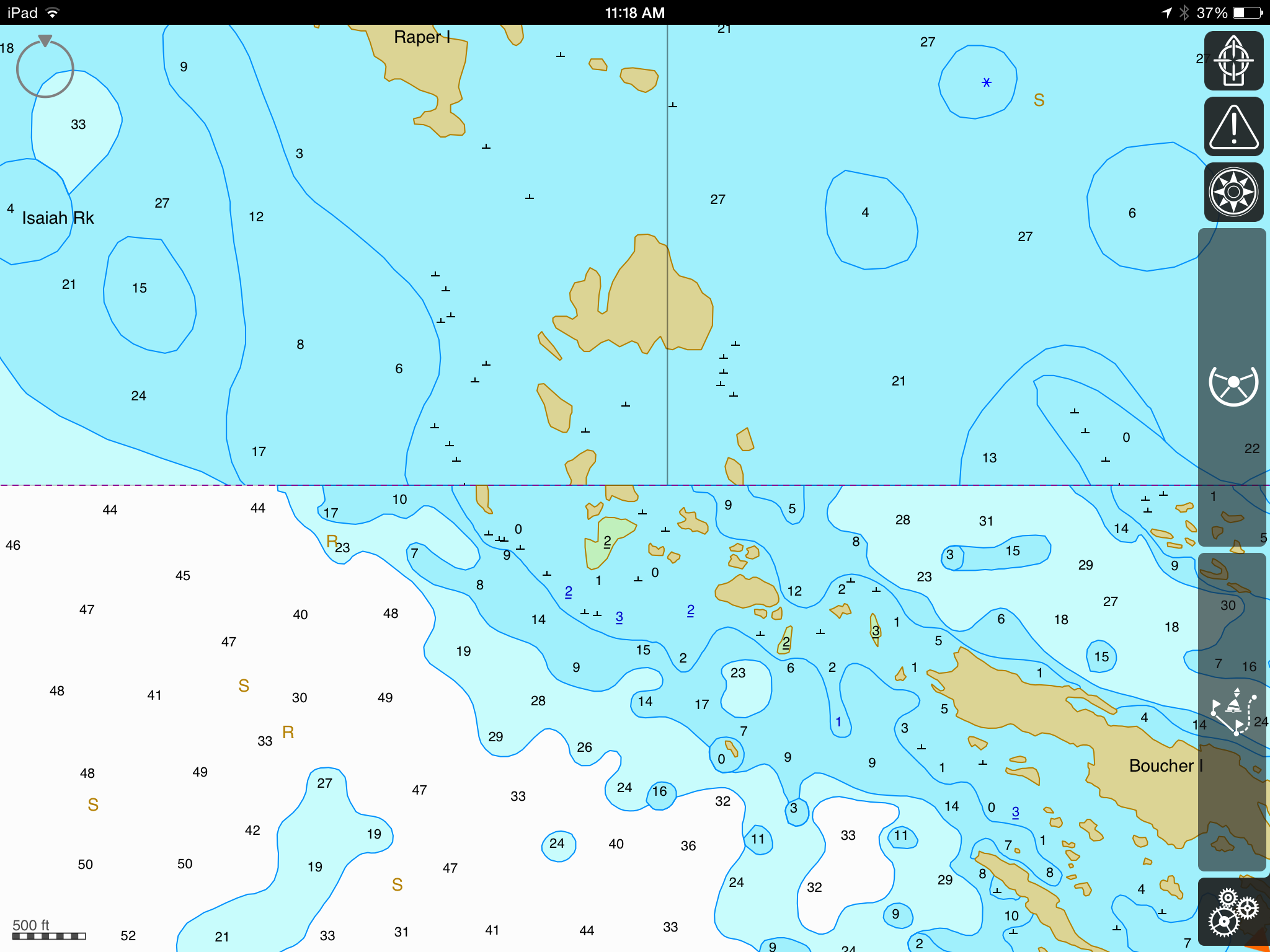
Looking at the app again as I sit here writing this post I’m finding the app to be quite buggy, not only is there a misalignment of the charts, the markers come and go as I pinch to zoom in the various areas. The markers are visible when zoomed out but not zoomed in. I see that the markers for Regatta Bay are now shown, but only if you are zoomed out sufficiently. Zoom in and they are gone. Regarding the chart misalignment, here a screenshot showing the problem (click on the image to see a larger version).

iSailor_Screenshot_2014-04-19

#3 – iNavX

This was my first app for the iPad. It matched up with the strip charts. That’s a virtue and a real liability. The benefit is familiarity but your are limited to the strip charts. If you want to head a couple of kilometers off the charted routes you are on your own. The charts are not vector based, so there is a real limitation on zooming in on the details that don’t exist with the other two apps. Price is also an issue, for two reasons. The first is the $120 ‘start up’ cost to get just the Georgian Bay charts. It’s probably cheaper than the paper charts, but I still need to carry the paper charts if I’m boating commerically. And then there was the mid-winter upgrade. You know how it works, you get a message that an app has been updated, click here to update. Well I did just that with the iNavX app, which uses the Fugawi X-Traverse charts. When I then opened up the app all of my charts were gone. Gone! Not only was the app updated but my original charts were removed. I realize that I am not eligible for updated charts (things don’t change much in these parts), but delete the charts that cost me $60? My paper charts don’t disappear when there are updates. I contacted the company and was told I could get the updated charts for $10. Well that’s not too bad, but I still haven’t done it yet. I probably will pay the $10 to have them and salvage something from my original $120 purchase, but I’m still ticked off. Please, let me know that I’ll lose all of my charts if I choose a ‘free’ update. I was perfectly happy with the previous version of the app.

So there you have it, a users opinion of three navigation apps for the GPS equipped iPad. I may decide to try the Navionics app on my Google 7″ Nexus tablet (2013 version) but that promises to set me back $55 plus tax. It’s hard to rationalize when I have a paid-for 3rd Generation GPS equipped iPad sitting in an Otter Box. The Nexus is very useful when traveling in the car and you use it to complement a Garmin GPS system. That involves about a $2 investment in downloading road maps to the Nexus that can be used offline.
VHF Course – April 15th & 22nd

A last reminder and information concerning The Maritime Radio Course, for VHF radios.  If you use a marine VHF radio you must have a license. The two evening course will be held on: April 15 and 22, 2014; 6:30 to 9:00; at Lakeland Long Term Care facility.  As you go up the hill use the first hospital parking on the right.  Your parking fee will be looked after.  The door to Lakeland is locked but there will be someone there to let you in. The fee for the course is $75 and includes the cost of the exam.

Interested in the course?

Call: John Mason 705-342-1315; masonj@vianet.ca
or, John Stothers 705-349-1345; Stothers@vianet.ca

We need to know as soon as possible, preferably April 7th to order the necessary course materials and provide you with the phonetic alphabet, knowledge of which is necessary to successfully pass the final examination.